
Greenville County Arrest Warrants Explained
A Greenville County arrest warrant starts with a sworn statement, not a phone tip. Under South Carolina's magistrate law, criminal proceedings begin on information under oath, and only that sworn information can produce an arrest warrant. Where the filing lands depends on the judicial officer who issued it and the type of case. Some arrests happen without a warrant under separate law, but that creates a different record entirely. So before anything else, figure out where the case began: Magistrate Court, a city Municipal Court, or General Sessions. The answer shapes every lookup that follows.
Greenville County Arrest Warrants Use a Sworn Process
Two statutes drive the paperwork. S.C. Code §22-3-710 makes sworn information the basis for a magistrate arrest warrant, while Section 22-5-110 separates a law-enforcement officer acting officially from complaints filed by other people, which may take a courtesy summons route instead. Miss that court date and the summons can turn into a warrant, provided the required showing is made. To see the documents themselves, the Judicial Branch publishes a blank SCCA412 Arrest Warrant and SCCA412A affidavit; they show the fields, never a person's case. A probable-cause affidavit may carry separate access limits, so ask the issuing court which pages you can view. Greenville County filings follow these same forms.
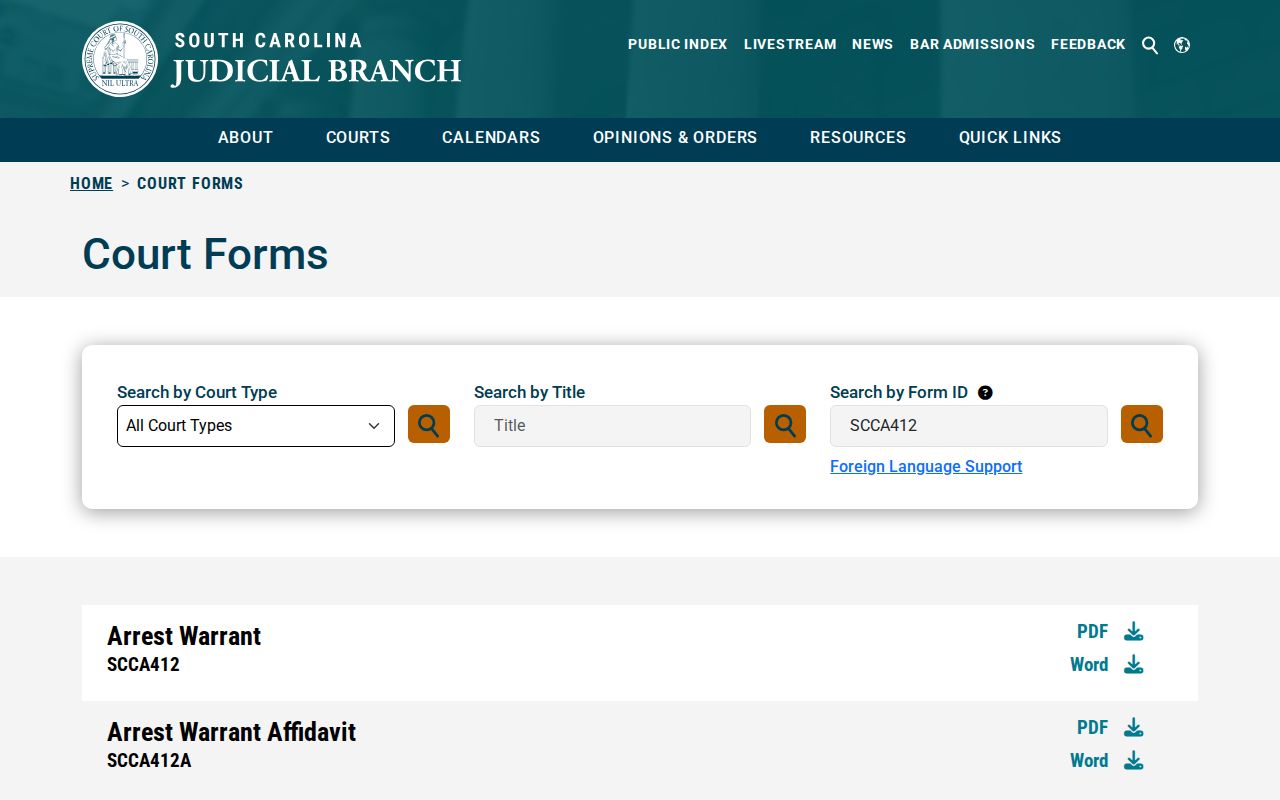
The blank form helps explain a record without displaying an individual warrant.
Inside a Greenville County Arrest Warrant
A blank state form and the Public Index reveal different slices of a Greenville County file. The index result may show case number, court agency, type, subtype, filing date, status, disposition date, party type, and action entries. The warrant document itself may carry the charge, the judicial officer, the issue date, the command, and service or return fields. Bring the court and case number when you ask for the exact document. One caution: General Sessions images may be limited online, and a bond or financial tab may not be enabled in every case.
| Case / warrant number | Case # The Clerk maps a General Sessions arrest-warrant number to this Public Index field. |
|---|---|
| Party and court | Name, party type, court agency, and case caption identify the file. |
| Charge | Charge or offense and case type appear where available. |
| Action and dates | Warrant filing, issue, arrest, return, and disposition dates answer different questions. |
| Bond | Amount and type may appear in the warrant or an enabled financial tab. |
| Documents | Affidavit, warrant, order, return, or later action may have separate access rules. |
Greenville County Case Number Is the Warrant Number
Here is a Greenville County quirk worth knowing. The Clerk's copy page says the General Sessions arrest-warrant number is simply called the case number in the Public Index. When paperwork hands you that number, use the case-number field. The Public Index guide also offers party, court, action, date, and indictment filters to narrow things down. The terminology does not stretch across every court or ticket, though. A Magistrate or Municipal Court may use its own case or citation number. If one identifier turns up nothing, call the issuing court and ask which number it uses.
Serving Arrest Warrants in Greenville County
GCSO Warrant Services receives active warrants and keeps the originals for service. Its listed units include Warrant Teams, Warrant Investigations, extradition and transport, and FASIT. A city police agency may hold its own incident or investigation records too. In Greenville County, the service path depends on the issuing court and the agency involved. The public sources promise no service schedule and do not explain person-specific enforcement decisions. For current status or how to appear, contact the issuing court, GCSO, and counsel as appropriate. Already detained? Use the Detention Center's published information route.
Greenville County Agency Records May Be Separate
One case can live in three places. The Clerk holds Greenville County General Sessions court filings, not every police report or warrant-investigation record. County Records Management Services handles records for GCSO, Greenville City Police, and the Detention Center, so ask the agency holding the report for a copy. Then ask the issuing court or Warrant Services about operational status. That means a court action, an agency report, and a service record may sit in separate systems. A FOIA request can seek records under South Carolina law, but it cannot order a warrant recalled. Be specific about the document you want.
Comparing Arrest, Summons, and Bench Warrants
Three papers, three meanings. South Carolina's magistrate process separates a sworn arrest-warrant request from a courtesy summons in some complaint paths. A bench warrant usually ties to a missed appearance or another court obligation. The exact court, action, and date on the record tell you which one you face. A summons calls a person to court; it is not a warrant authorizing an arrest. Fail to appear later, and the process can change. Before assuming a Greenville County citation, summons, or arrest warrant calls for the same response, ask the issuing court.
| Feature | Arrest Warrant | Summons | Bench Warrant |
|---|---|---|---|
| What it does | Authorizes arrest under the order | Requires a court appearance | Enforces a court obligation |
| Basis | Sworn probable-cause process | Complaint route allowed by law | Missed appearance, comply, pay, or bond event |
| Record source | Issuing court and agency | Issuing court | Existing case and issuing court |
| Next step | Confirm status and seek counsel | Attend on the stated date | Ask the court about recall or appearance |
Greenville County Summons Can Change the Case Route
Not every Greenville County case starts with a warrant. Under S.C. Code §22-5-110, certain complaints from non-law-enforcement sources may use a courtesy summons path. If the person fails to appear, an arrest warrant can follow when the sworn statement supports probable cause. The law keeps that route distinct from the ordinary official law-enforcement request. Read the case action rather than guessing from a ticket or summons alone. The issuing Magistrate or Municipal Court can explain what was filed and whether a later appearance or warrant action was entered.
If There's an Arrest Warrant for You
Greenville County residents who find an active arrest warrant should start with the issuing court or GCSO Warrant Services. Either office can confirm the record. From there, talk with a licensed South Carolina attorney. Together you can weigh an appearance, a bond, voluntary surrender, or a motion to recall or quash the warrant. No countywide walk-in surrender process exists here. The right step turns on the court and the order itself. For General Sessions copies, give Criminal Records the case or indictment number and name the exact documents you want, then keep every bond order, receipt, or written court action. If someone is detained, the Detention Center requires that judicial release reach the facility before release processing even begins, and paying bond alone does not complete release.
Important: Do not rely on an old index result. Confirm the current warrant and appearance instructions with counsel and the court that issued it.
Greenville County Federal Warrants Use PACER
A federal criminal case does not live in the Greenville County Public Index. Federal filings for the District of South Carolina's Greenville Division run through PACER. The federal Clerk answers record questions. GCSO, the County Clerk, and the county inmate search are separate channels entirely. The Carroll A. Campbell federal courthouse sits near the Greenville County courthouse, but the two buildings serve different courts. Confirm the agency and address before you visit. Any federal warrant, bond, or surrender question calls for federal counsel, and the federal court publishes its Greenville location and hours.
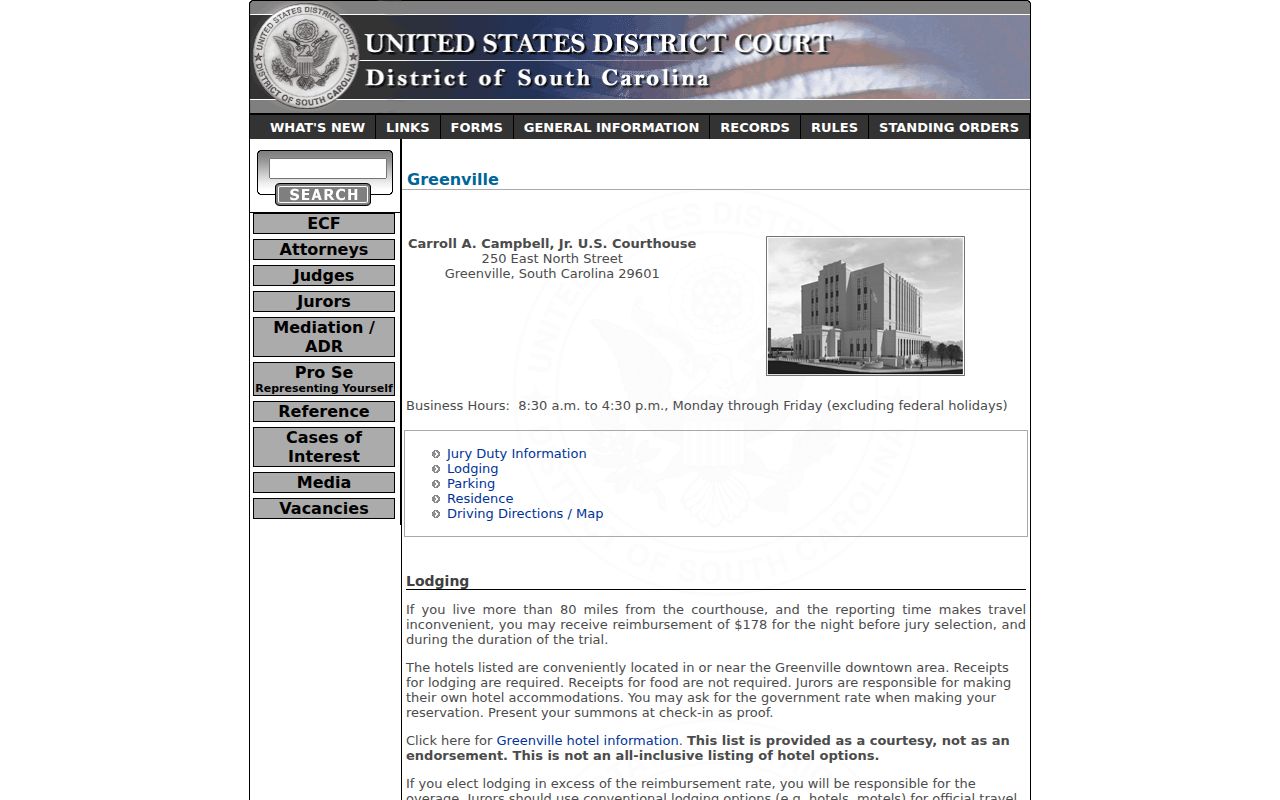
This courthouse route is separate from the county Public Index.