
Greenville County Bench Warrants Explained
A bench warrant is court process tied to an obligation in an existing case. Greenville County's Court Dates page warns that a defendant must attend scheduled appearances and that missing one could lead to a bench warrant and possible bond forfeiture. Other records may show failure to comply, failure to pay, or a bond-condition issue.
Do not infer the reason from the word “bench” alone. Read the exact action and ask the court that entered it. A warrant is not a conviction, and the case record may contain later events that change what happens next.
Greenville County Court Dates Can Lead to a Bench Warrant
The county's Court Dates page says a missed required appearance could result in a bench warrant and possible bond forfeiture. The record should show the court, case type, and action. A date that passed long ago does not prove the warrant was recalled or served.
If a date was missed, contact the issuing court and ask whether an appearance, motion, bond, or other order is needed. No countywide walk-in recall docket or universal grace period was found in the official sources reviewed.
How Greenville County Bench Warrants Are Issued
A judge in the case can issue a bench warrant after a missed appearance or other court obligation. South Carolina's SCCA413 blank form is titled Bench Warrant, and SCCA413A is a Bench Warrant/Arrest Warrant Addendum. The court action and later return or recall entry shape the file.
There is no public statewide name-search warrant system in the reviewed sources. GCSO receives active warrants for service, while the court keeps the case record. Do not assume the Clerk, sheriff, and issuing court display the same information at the same time.
Greenville County Bench Warrant Form Fields
The state form index helps explain the structure without copying an individual court record. A blank bench-warrant form may identify the court and case, state the failure-to-appear or comply basis, set bond terms, and provide service or return fields. An addendum can hold later information.
The actual Public Index action label can vary by court. Use the court agency, case number, and filing date to locate the right record, then ask the clerk what copy is available.
The Judicial Branch lists the blank SCCA413 form and its addendum.
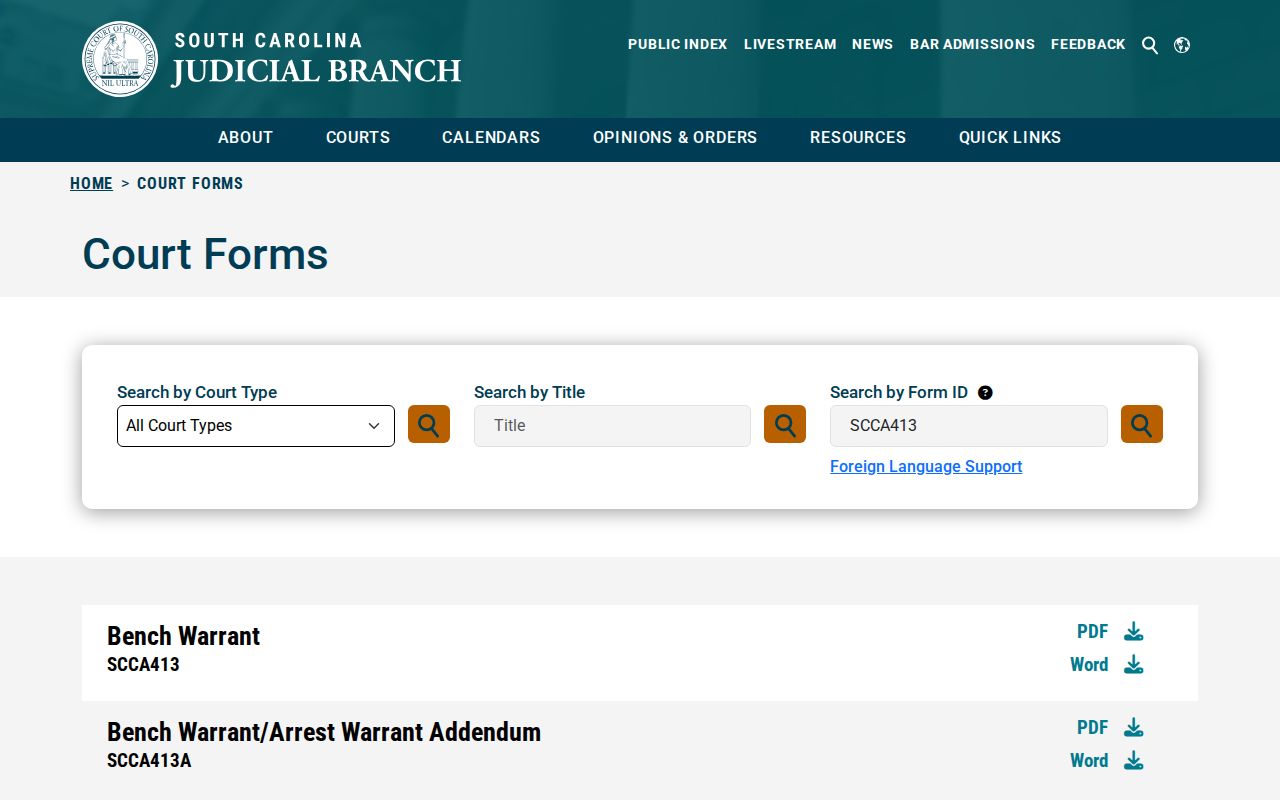
The form describes a record layout, not a person's warrant.
Bench Warrants and Arrest Warrants Compared
Both are court process, but they arise for different reasons. A bench warrant is tied to a court obligation in a pending case. An arrest warrant follows a probable-cause process associated with a charge. The proper contact and next step depend on the record and issuing court.
Greenville County General Sessions, Magistrate Court, and Municipal Courts can hold different case types. Read the court name on the filing before using a countywide label.
| Feature | Bench Warrant | Arrest Warrant |
|---|---|---|
| Trigger | Missed appearance, noncompliance, or bond condition | Sworn probable-cause process |
| Issuing route | Judge in the existing case | Judicial officer on a warrant request |
| Record path | Issuing summary court or General Sessions | Issuing court, Clerk, and agency file may differ |
| Next step | Ask about appearance, recall, or bond | Confirm charge and service status with the court |
Greenville County Clerk May Not Hold the Bench Warrant
The County Clerk's warrant-copy guidance excludes Magistrate and Municipal Court cases. A Public Index result can help identify a court agency, but it does not move the file into the Circuit Clerk's office. Call the court that issued a city or county summary-court warrant.
For a General Sessions matter, the Clerk handles copies and GCSO Warrant Services handles warrants for service. That split is why a person may need both offices. Agency reports also belong with the office that created or holds them.
Resolving a Greenville County Bench Warrant
Only the issuing court can set the route to recall or resolve a bench warrant. There is no countywide promise that online payment, a walk-in appearance, or a bond will clear every case. Ask what order is in place, whether counsel should arrange an appearance, and how the court will confirm its action.
Gather the case number, missed date, any citation, prior order, and proof of payment or appearance. Keep copies of receipts and ask for written proof of recall, return, or disposition.
- Confirm the court and exact action in the Public Index or with the court clerk.
- Ask a South Carolina attorney whether to arrange an appearance, bond, or motion to recall or quash.
- Follow the issuing court's instructions for any appearance or payment; do not assume a walk-in process.
- Resolve the underlying obligation and request written confirmation of the warrant's status.
Caution: A missed date can affect bond and court process; contact counsel and the issuing court promptly to learn the required next step.
Greenville County Bond Court Has Two Published Routes
The county Bond Court page lists Law Enforcement Center Room 116-A at 4 McGee Street and phone 864-467-2402. A state Judicial Branch directory separately lists Central Bond Court at 20 McGee Street and 864-467-5312. County bail instructions also refer to the Detention Center at 20 McGee Street.
These official pages do not align on one location and number. Call the court before traveling. Bond set by a magistrate appears on the warrant, but Clerk records may not show it for up to 15 days after the warrant reaches that office.
The county's Bond Court page shows its public contact block.
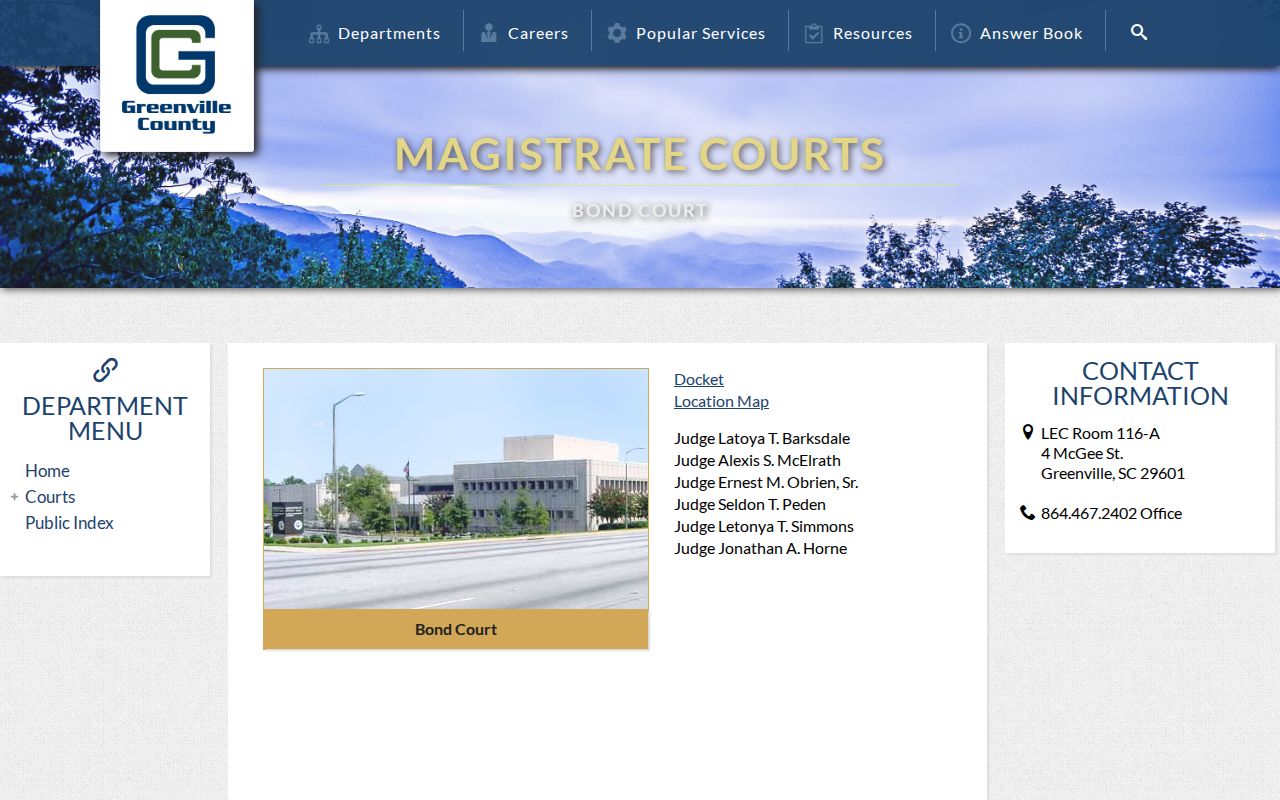
Use the court's current instructions before making an in-person trip.
Finding the Court That Issued the Warrant
Check whether the case is General Sessions, Magistrate Court, or a city Municipal Court. Greenville County's six named Magistrate pages include Bond, Gantt, East, North, South, and West; the county overview says seven courts, so use its GIS locator if the right office is unclear. Do not invent a seventh location.
For a General Sessions case, use the Public Index, Clerk Criminal Records, and GCSO as needed. A city ordinance or traffic warrant belongs with that city's court. In all cases, the judge or court that issued the warrant controls a recall, not the Sheriff alone.
Greenville County publishes its summary-court contacts and jurisdiction in one place.
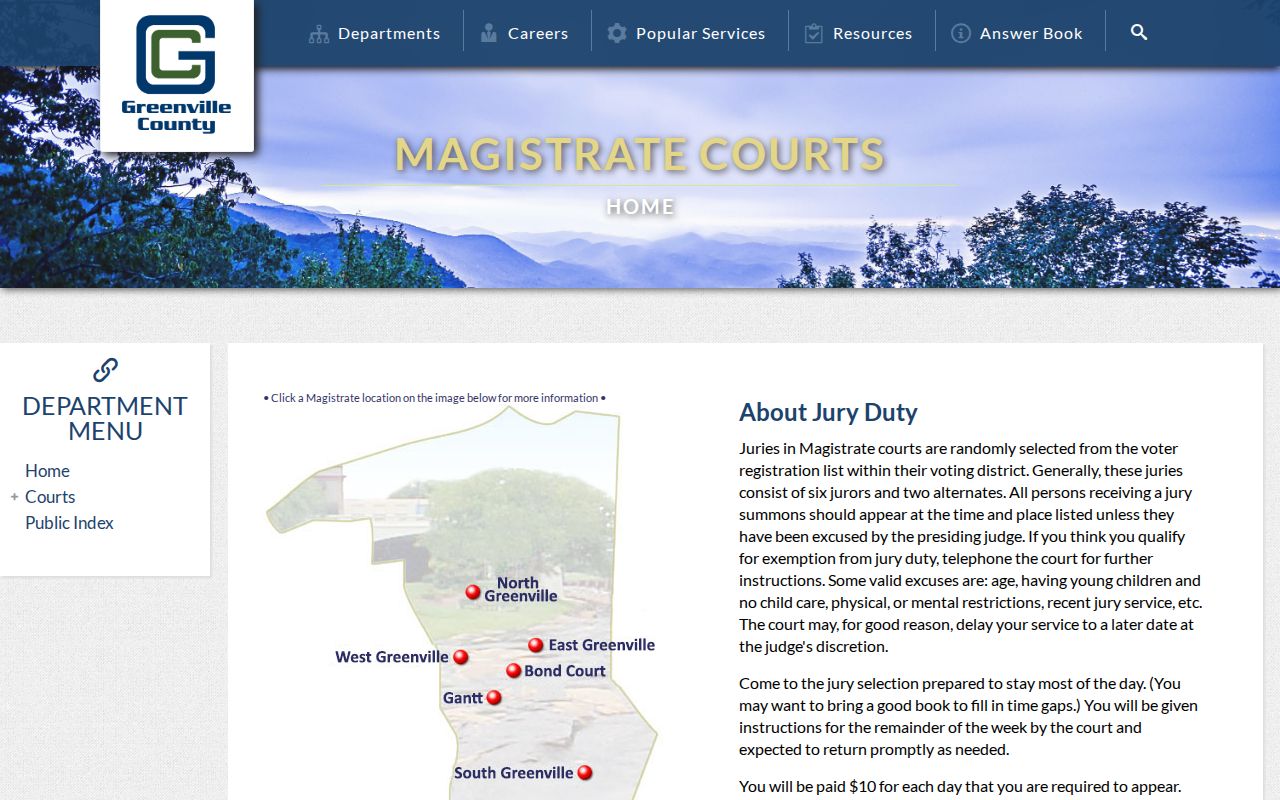
A city or Magistrate Court record may not be held by the Circuit Clerk.
Greenville County City Bench Warrant Rules Differ
Greer says unpaid criminal charges can lead to a contempt warrant and publishes bond and payment instructions. Mauldin warns that failure to appear can result in an arrest warrant and says payment plans are arranged in person. Fountain Inn publishes its own weekday and weekend bond windows. These are city-specific terms, not one county rule.
If a city court issued the warrant, ask that clerk what payment, appearance, or judge action is required. A payment receipt does not prove recall. Confirm current hours and amounts with that court, since published schedules and fees can change.